1 pattern
For one project
$5.99USD
$5.99 per pattern
Buy 1 patternTurn a favorite photograph of your cat or dog into a custom pet portrait cross stitch pattern with authentic DMC thread matches and printable PDF charts.
Upload a photo and see your pattern in seconds. No account needed to preview.
Upload a portrait, pet or landscape. The studio opens with your photo: crop it, choose the size and colours, and check the printable PDF. No account needed until you download.
Rather chart it yourself? Start from a blank grid
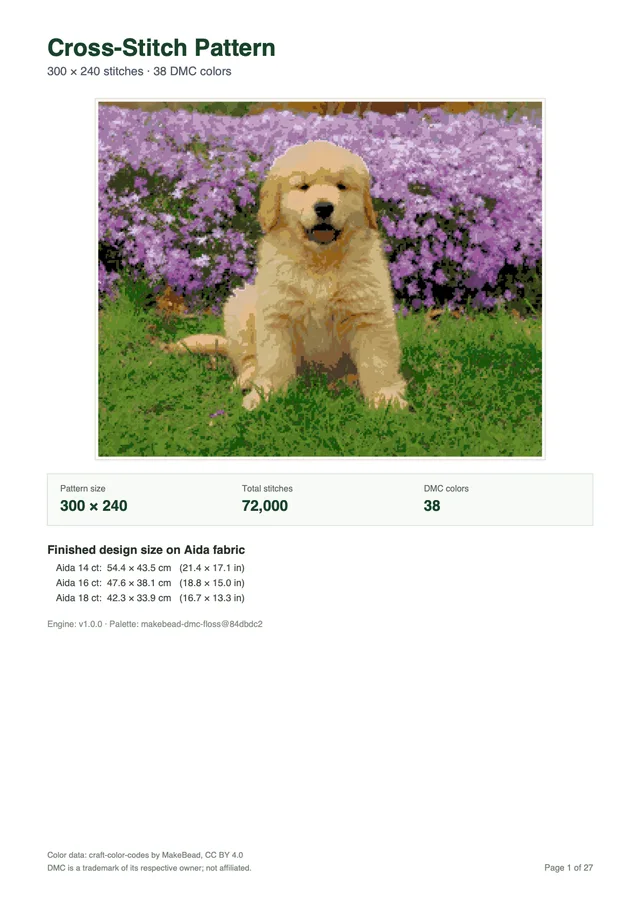
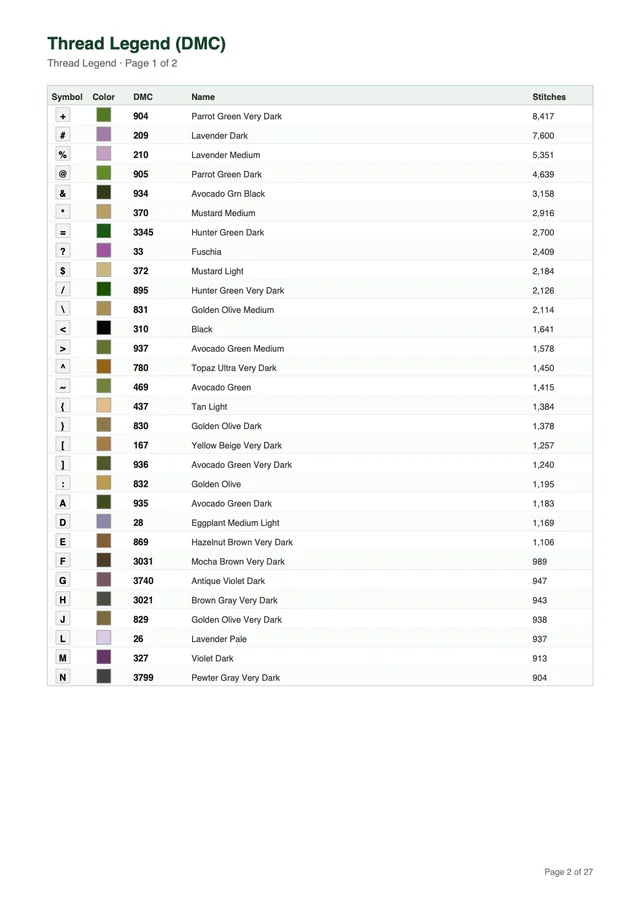
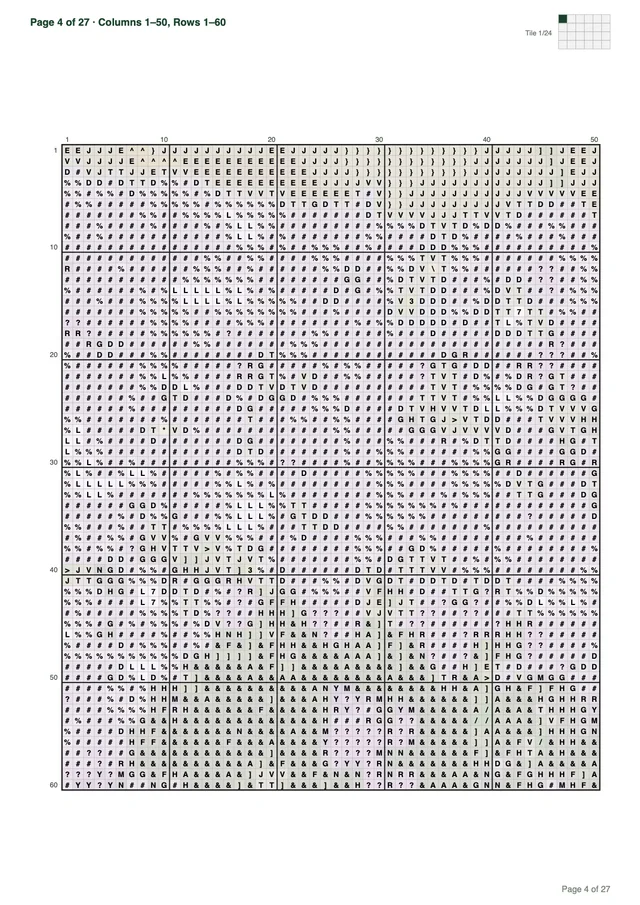
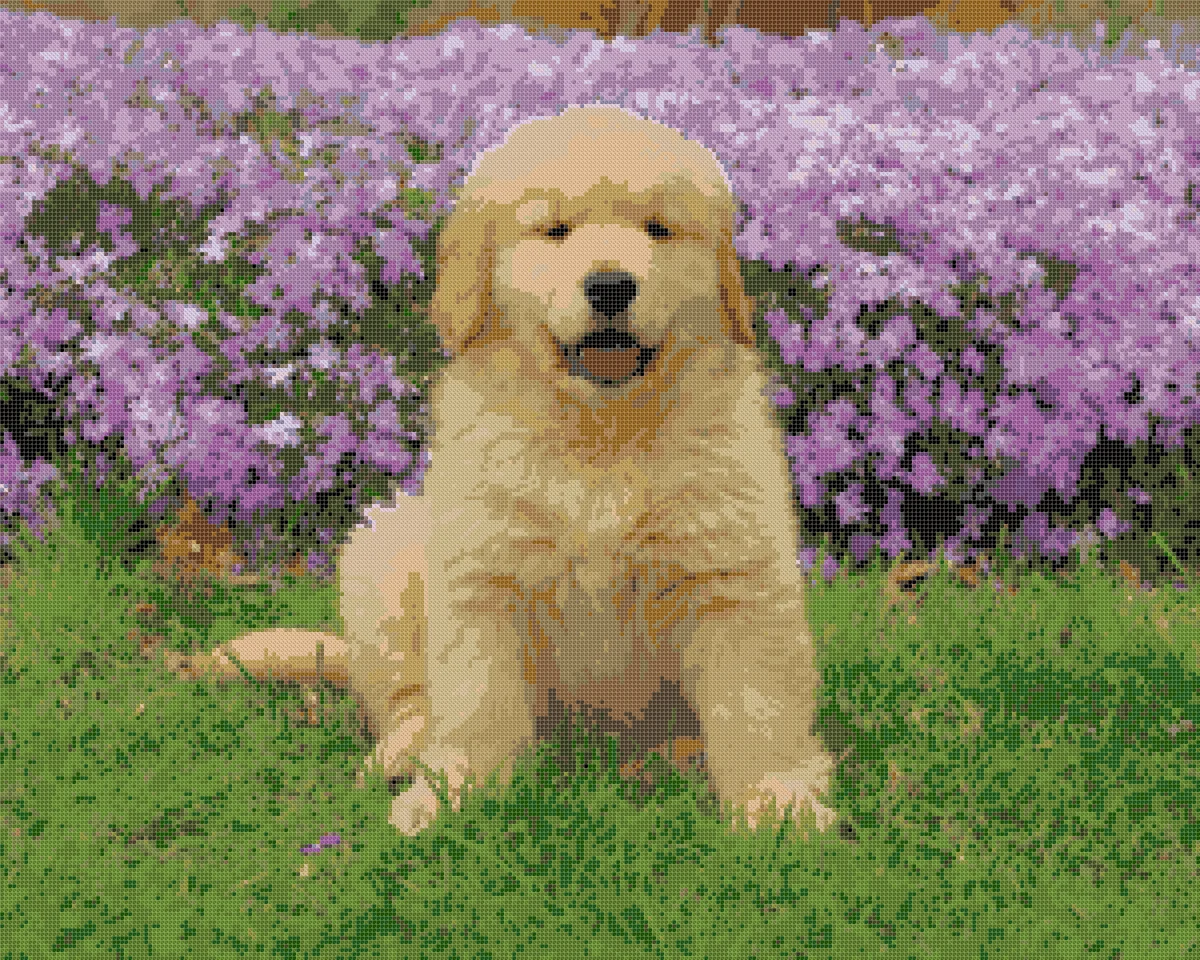
Every download is a multi-page PDF built from your pattern, not a screenshot. This sample was made from the photo above.
Want a different subject? Browse all 67 free patterns
Previewing is free. You pay only when you download a new pattern.
Your first pattern is free Sign up and get 1 credit. No card needed.
Make my patternFor one project
$5.99USD
$5.99 per pattern
Buy 1 patternOne for you, two to give
$12.99USD
$17.97 if bought one by oneSave 27%
$4.33 per pattern
Buy 3 patternsFor the whole family
$19.99USD
$35.94 if bought one by oneSave 44%
$3.33 per pattern
Buy 6 patternsPrices in USD, excluding tax: VAT or sales tax is added at checkout where it applies. Payments by Paddle, our merchant of record. By buying you agree to the Terms of Service and the Refund Policy.
High-contrast close-ups taken at your pet’s eye level produce the clearest counted charts. When you convert a photograph of your cat or dog into needlework, chart resolution depends entirely on the clarity of your source image. Instead of buying generic store charts that feature random animals, turning your own pet into a pattern captures the exact whisker spots, coat markings, and soulful gaze that make your companion unique.
Whether you want to chart your playful kitten or design a quiet memorial piece for a faithful hound, starting with a clean digital snapshot makes charting straightforward. Our browser converter processes JPEG, PNG, and WebP files with a generous 20 MB size limit and up to 8,000 pixels per side. You crop directly in the browser window, preview the embroidered effect instantly, and tune your palette before generating a multi-page PDF chart.
Position your camera directly at eye level with your companion to prevent distorted facial proportions. Photographing a pet from standing height makes the forehead look oversized and tucks the muzzle into shadow. Crouch down on the living room rug or photograph your pet resting on a sofa where the lens meets their pupils directly.
Natural indirect daylight brings out authentic fur gradients without washing out subtle coat tones. Direct camera flashes create harsh white reflections that blow out pale fur and turn black eyes into hollow circles. Overcast morning light near a bright window illuminates individual hair strands, giving the color-matching algorithm the clean RGB data it needs to assign accurate thread codes.
If your pet moves quickly, use burst mode on your phone while holding a favorite treat right behind the camera lens. A single second of focused attention is enough to capture sharp whiskers and bright highlights across both irises. For older animals who prefer resting, capture them during their regular nap routine while sunlight enters the room at an angle.
Pet eyes remain crisp in counted cross stitch when the iris spans at least eight to twelve stitches across. Unlike hand-drawn pet portrait embroidery that relies on fine backstitch outlines around the eyelids, our pattern maker uses pure full cross stitches. You do not need backstitching, fractional quarter-stitches, or French knots to achieve lifelike depth when your grid resolution provides enough pixels for the eye.
The secret to a lively expression is preserving the tiny white catchlight inside the pupil. In a small 50-stitch pattern, an eye might measure only two stitches wide, blending the dark iris and black pupil into an indistinct dark patch. Scaling your pattern width to 150 or 200 stitches gives each eye ten to fifteen squares of space, allowing dark brown pupils, golden irises, and pale highlights to render cleanly in separate DMC shades.
Check your photo closely before uploading to verify that both eyes are in sharp focus. If one eye sits in deep shadow while the other catches the light, the shaded eye will convert into muddy dark brown squares. Balanced illumination ensures that both eyes reflect your pet’s alert, curious character across the finished fabric.
Crop tightly around your pet’s face and chest to dedicate all available stitches to fur and expression. The Cross Stitch web app does not offer automated background removal, so every pixel in your cropped frame becomes a real square in your pattern. Leaving wide living room backgrounds, garden fences, or patterned carpets in your image forces the color palette to waste threads on furniture rather than your companion.
Use the interactive crop box in our interactive pattern maker to center your pet’s head. You can drag the corner handles to frame the ears, whiskers, and collar while discarding distracting background clutter. If your cat sits against a busy patterned sofa, consider snapping a fresh photo against a plain wall or solid throw blanket before converting.
A clean, solid background also speeds up your needlework process considerably. Filling fifty rows of mottled beige wallpaper around a dog’s ears takes hours of thread changes without adding value to the portrait. Framing the animal closely lets you focus your needlework entirely on the muzzle, ears, and chest markings that define your pet.
Select your maximum color count based on your pet’s coat pattern and your planned crafting hours. Our converter matches image colors in CIELAB space using the CIEDE2000 color difference formula against 489 six-strand embroidery floss shades from the MakeBead DMC floss dataset. It reduces the image palette with Median Cut and k-means clustering, automatically merging duplicate thread matches into a practical legend.
Working on cat cross stitch patterns or designing custom dog cross stitch charts requires balancing subtle fur shading against thread-switching fatigue. A chart with too few colors creates harsh posterized banding across smooth coats, while an excessive color count scatters single isolated squares across the cloth. The presets in our converter let you test 10, 20, 30, 40, or 50 colors instantly before making your final selection.
Single-tone coats usually look balanced with 15 to 25 DMC colors, while complex tabby and brindle coats benefit from 30 to 45 colors. Solid black dogs and sleek black cats are not made of pure black floss alone; their glossy fur reflects ambient light in charcoal, deep navy, slate gray, and espresso brown tones. Setting your palette to 20 or 25 colors lets the converter assign shades like DMC 310 (Black), DMC 3799 (Very Dark Pewter Gray), and DMC 413 (Dark Pewter Gray) to build realistic body contours.
White cats and pale cream dogs present the opposite challenge, requiring soft off-white and cream gradations rather than stark white blocks. Shades like DMC Blanc, DMC 3865 (Winter White), DMC 712 (Cream), and DMC 01 (White Tin) provide gentle shading under the chin and around the ears without looking dingy. Setting at least 20 colors prevents pure white fur from flattening into an unshaded silhouette.
We suggest 25 to 35 DMC colors for ginger and orange tabby cats to capture golden undertones, rich copper stripes, and pale peach belly fur. Expect warm shades like DMC 720 (Dark Orange Spice), DMC 976 (Medium Golden Brown), and DMC 3826 (Golden Brown).
For brown tabby and tortoiseshell coats, we recommend choosing 35 to 45 DMC colors. The intricate mix of black flecks, tan banding, and creamy bib patches needs extra palette depth to keep markings distinct.
Calico and tricolor pets typically chart best with 30 to 40 DMC colors to represent distinct patches of black, orange, and white alongside the soft shadow transitions where color patches meet.
For brindle and merle dogs, a palette setting of 35 to 48 colors usually works best. The fine mottling in breeds like Australian Shepherds and Whippets demands close tonal steps in gray, beige, and chocolate floss.
If you are exploring general cat cross stitch ideas or planning a large dog cross stitch heirloom, previewing both the artwork view and symbol view helps you check whether the fur gradients blend naturally. You can zoom and pan across the grid to inspect every color group before settling on your thread count.
Calculate your finished portrait dimensions by dividing your stitch width and height by your fabric count. For example, a 150-stitch wide design stitched on 14-count Aida measures 10.7 inches wide (150 divided by 14), while that same design on 18-count Aida measures only 8.3 inches wide (150 divided by 18). Choosing the right fabric count lets you fit standard commercial picture frames without awkward custom framing costs.
Always allow two to three inches of unstitched fabric margin on each side for stretching and framing. If your calculated design measures 10 by 8 inches, cut your fabric piece to at least 15 by 13 inches to ensure comfortable mounting on foam board or inside a hoop. The table below lists finished dimensions and frame recommendations for standard pet portrait presets.
| Stitch Count (Width × Height) | 14-count Aida Size | 16-count Aida Size | 18-count Aida Size | Recommended Frame Size (with 2.5 in margin) |
|---|---|---|---|---|
| 100 × 80 stitches | 7.1 × 5.7 in (18.1 × 14.5 cm) | 6.3 × 5.0 in (15.9 × 12.7 cm) | 5.6 × 4.4 in (14.1 × 11.3 cm) | 12 × 10 in (30 × 25 cm) |
| 150 × 120 stitches | 10.7 × 8.6 in (27.2 × 21.8 cm) | 9.4 × 7.5 in (23.8 × 19.1 cm) | 8.3 × 6.7 in (21.2 × 16.9 cm) | 16 × 14 in (40 × 35 cm) |
| 200 × 160 stitches | 14.3 × 11.4 in (36.3 × 29.0 cm) | 12.5 × 10.0 in (31.8 × 25.4 cm) | 11.1 × 8.9 in (28.2 × 22.6 cm) | 19 × 16 in (48 × 41 cm) |
| 300 × 240 stitches (Puppy demo) | 21.4 × 17.1 in (54.4 × 43.5 cm) | 18.8 × 15.0 in (47.6 × 38.1 cm) | 16.7 × 13.3 in (42.3 × 33.9 cm) | 26 × 22 in (66 × 56 cm) |
For memorial pieces celebrating a departed pet, smaller sizes like 100 by 80 stitches on 16-count Aida work beautifully on nightstands or mantels. For a major living room display or an anniversary gift, 200 by 160 stitches on 14-count Aida creates an impressive statement piece. You can test multiple width presets in the browser converter to match your desired wall space.
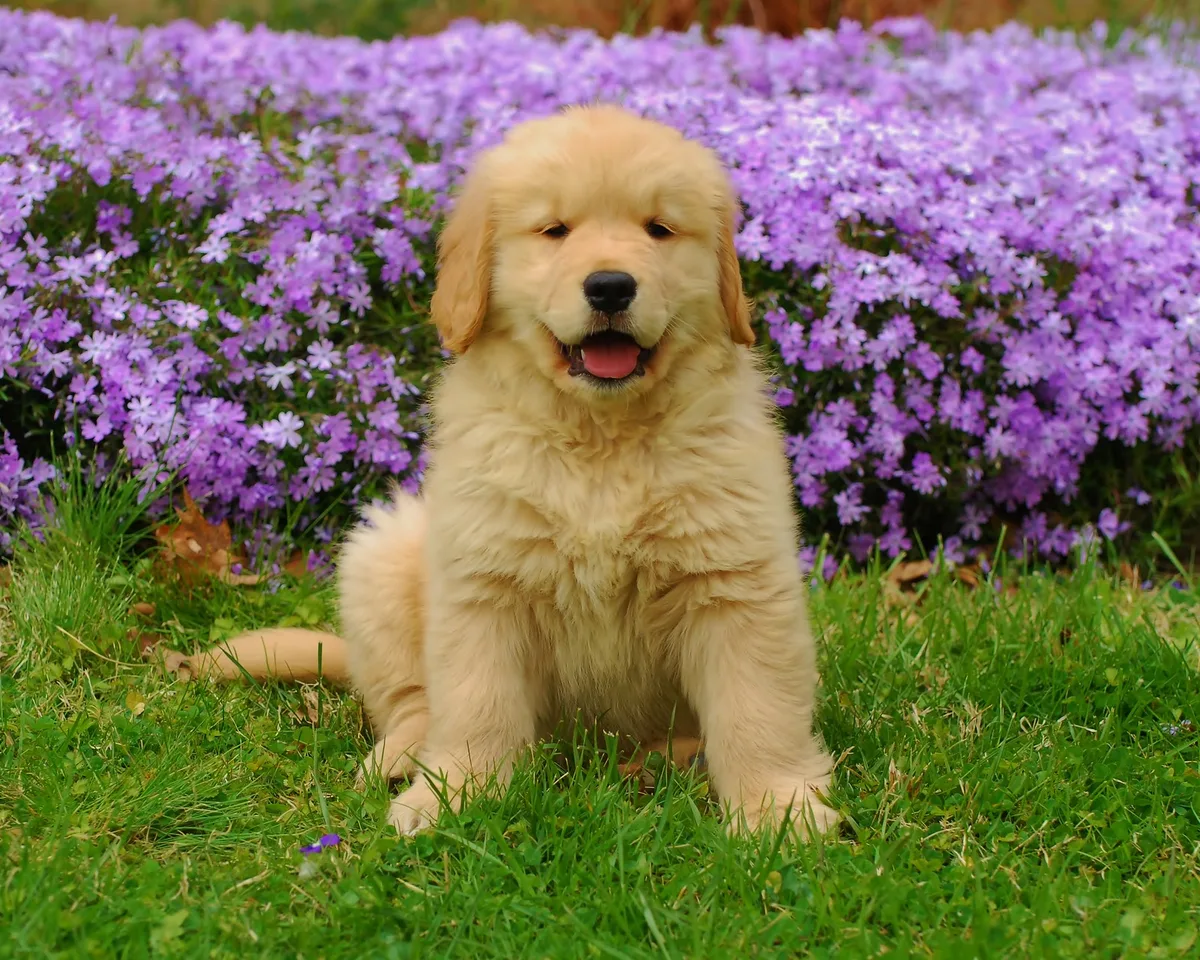
Our test across 11 sample photos at 100 stitches wide and 30 colors achieved a mean CIEDE2000 error of 1.8 to 6.8 per image. Each benchmark pattern computed in 47 ms or less in Node. The golden retriever puppy sample shown on this page was converted at maximum detail: 300 stitches wide by 240 stitches high with 38 DMC colors. The source image is a public domain photograph by RetyiRetyi licensed under Creative Commons CC0.
Notice how the 38-color palette resolves fine fur textures across the pup’s ears and muzzle while keeping the green lawn and purple flowers distinct. The median CIEDE2000 color error on this image remained under 2.4, demonstrating that 38 DMC thread colors provide enough subtlety to recreate natural fur shading without muddying transitions. In our benchmark, only saturated neon blues encounter slight gamut limits because the physical 489-color DMC palette lacks electric cyan dyes (the closest DMC thread sits approximately delta E00 8 away).
For crafters who enjoy kitten cross stitch patterns or personal counted cross stitch cats, using 150 to 200 stitches provides comparable clarity on feline whiskers and eye pupils. Crafters working on counted cross stitch dogs can inspect the puppy example above to verify how clean symbol charts represent natural fur folds. You can explore our custom cross stitch patterns guide to compare DIY browser charting with commissioning Etsy designers, or read our guide on how to make a cross stitch pattern for full manual graphing comparisons. If you wish to chart human family members alongside your pets, visit our people portrait cross stitch patterns converter.
Every completed pattern exports as a clean, multi-page PDF formatted for Letter or A4 paper. The first page contains a full color cover overview, exact stitch dimensions, total stitch count, thread palette count, and finished fabric dimensions for 14, 16, and 18-count Aida. Following the cover, dedicated thread legend pages display each unique symbol alongside its DMC color code, official color name, required stitch count, and skein estimation.
The symbol chart pages are arranged in a convenient tiled grid with bold black lines every 10 stitches and coordinate numbers along the outer edges. A miniature page locator map in the corner of each chart sheet shows where your current section fits into the larger portrait. This layout allows you to print the pages on your home printer and mark your progress with a highlighter as you stitch.
When you sign up with Google, you receive 1 free credit to start your first project. Generating a new chart costs 1 credit per new pattern — repeat downloads cost nothing. You can explore free previews of your chart, test color palettes, and check fabric sizing before spending a credit. A pet face that should finish inside a 4-inch hoop is covered on the small cross stitch pattern page.
Yes. You can upload any clear photo in JPEG, PNG, or WebP format up to 20 megabytes and 8,000 pixels per side. The pattern maker crops to your pet's face and maps fur tones to standard DMC floss colors right in your browser.
Most single-color coats like black, white, or cream look crisp with 20 to 30 colors. Complex multi-colored coats like tortoiseshell cats, brindle dogs, or calicos benefit from 35 to 45 colors to prevent flat color blocks.
14-count Aida is the standard starting point and easy to see while stitching. If you want a smaller, denser finish for a desktop frame or gift, 16-count or 18-count Aida produces finer detail for the same number of stitches.
The converter does not include automatic background removal. To keep your chart focused on your pet, crop tightly around your dog or cat's head using the on-screen crop handles, or photograph your pet against a plain wall or solid blanket.
Every PDF includes a cover page with fabric dimensions, a DMC thread legend, and tiled symbol chart pages. The chart pages feature bold grid lines every ten stitches alongside edge coordinates and an overview minimap.
Creating a personalized pet portrait cross stitch pattern lets you preserve memories of your beloved dog or cat with needle and thread. Pick your favorite clear photo, adjust your stitch count and DMC palette, and download your printable multi-page chart to start stitching today.
Try for freeUpload a photo and see your pattern in seconds. No account needed to preview.