1 pattern
For one project
$5.99USD
$5.99 per pattern
Buy 1 patternUpload a public-domain painting file, then preview a DMC chart before you download the PDF.
Upload a photo and see your pattern in seconds. No account needed to preview.
Upload a portrait, pet or landscape. The studio opens with your photo: crop it, choose the size and colours, and check the printable PDF. No account needed until you download.
Rather chart it yourself? Start from a blank grid
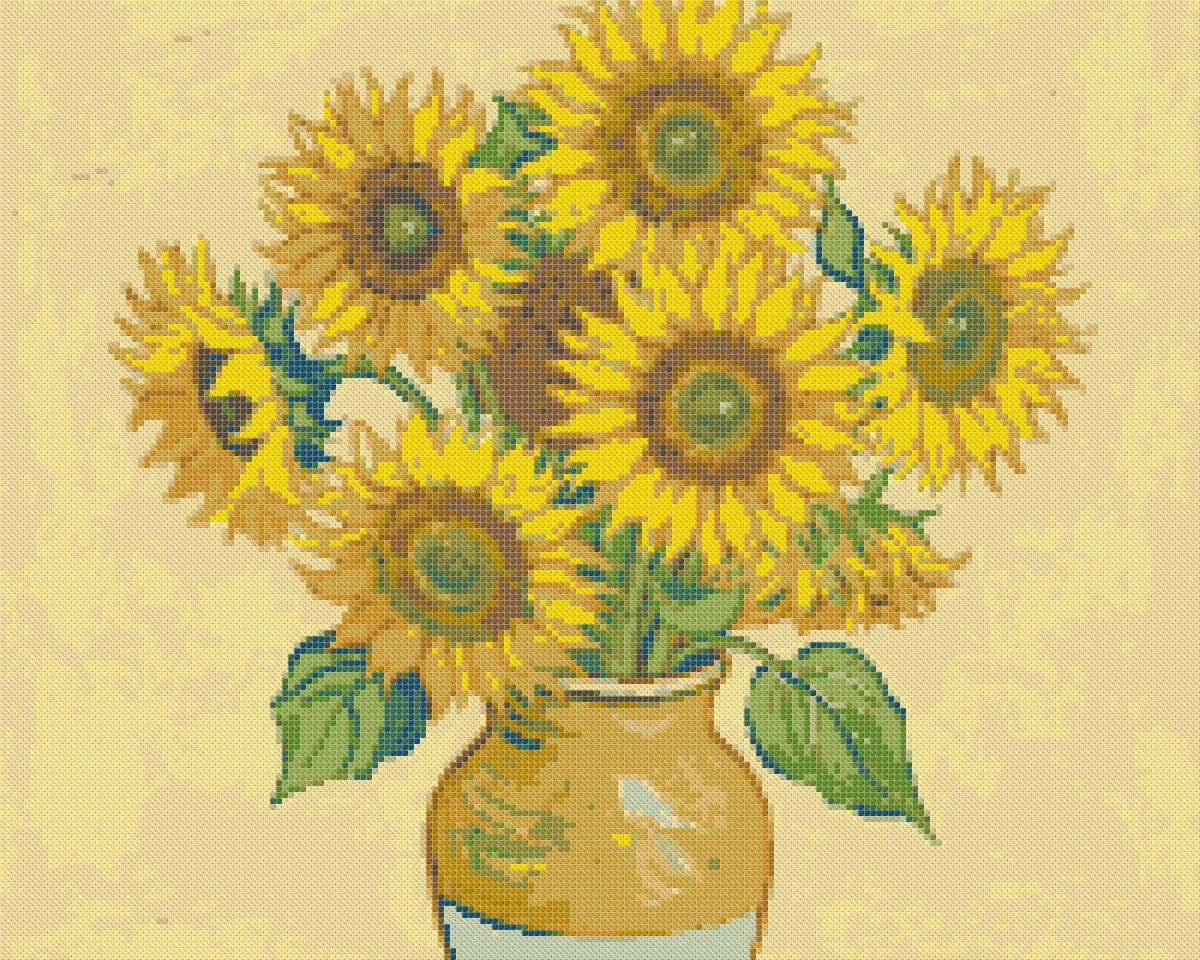
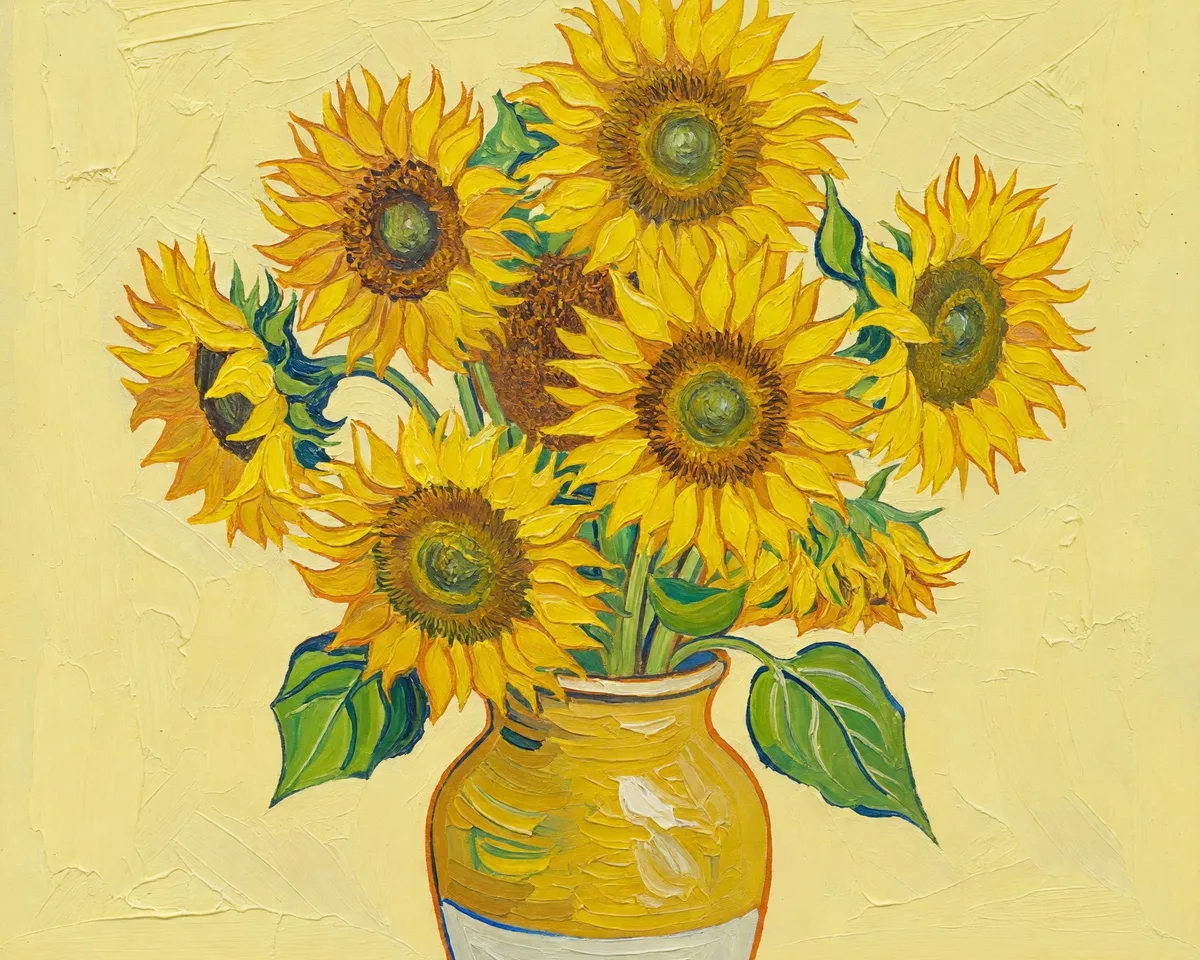
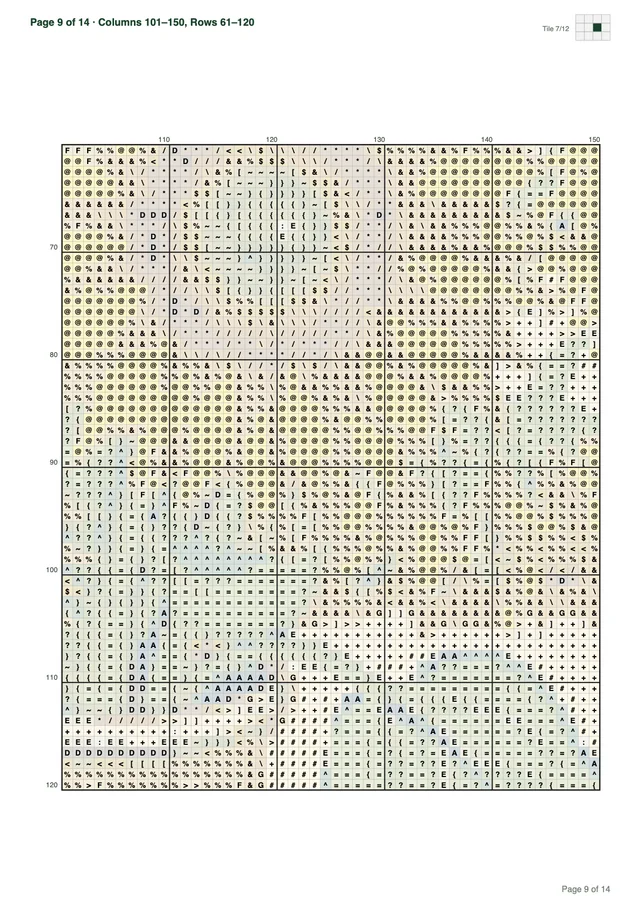
Every download is a multi-page PDF built from your pattern, not a screenshot. This sample was made from the painting above.
Want a different subject? Browse all 67 free patterns
Previewing is free. You pay only when you download a new pattern.
Your first pattern is free Sign up and get 1 credit. No card needed.
Make my patternFor one project
$5.99USD
$5.99 per pattern
Buy 1 patternOne for you, two to give
$12.99USD
$17.97 if bought one by oneSave 27%
$4.33 per pattern
Buy 3 patternsFor the whole family
$19.99USD
$35.94 if bought one by oneSave 44%
$3.33 per pattern
Buy 6 patternsPrices in USD, excluding tax: VAT or sales tax is added at checkout where it applies. Payments by Paddle, our merchant of record. By buying you agree to the Terms of Service and the Refund Policy.
A famous painting cross stitch chart converts an uploaded digital image into a counted grid of DMC embroidery floss symbols. The Cross Stitch pattern maker maps your picture into distinct color zones without hosting an internal artwork archive.
Transforming fine art into needlework starts when you sign up and load a clean image file onto our website. The tool accepts JPEG, PNG, and WebP files up to 20 MB and 8,000 pixels on each side. The pattern maker processes the entire layout directly inside your browser so you can preview the design immediately. You can inspect every stitch coordinate, test different canvas proportions, and review color assignments before finalizing the document.
The software converts continuous brushstrokes into distinct square grid units using advanced color matching. Our engine maps source colors through CIELAB and CIEDE2000 calculations against 489 DMC shades from the MakeBead dmc-floss dataset. In our own test, 11 local photos at 100 stitches wide and 30 max colors were tested with a mean CIEDE2000 difference between 1.8 and 6.8 at most 47 ms in Node. Even complex oil glazes receive practical thread representations across the floss palette.
Fine art needlework relies on disciplined pixel organization. Unlike commercial kits that rely on specialty threads, the pattern maker keeps your supplies accessible with standard stranded cotton. You can explore our general guide on how to make a cross stitch pattern to learn about symbol keys and grid setup. Stitchers who enjoy converting diverse visual subjects can also explore our photo to cross stitch pattern workflow for family pictures.
Preparing a painting chart requires selecting a balanced pixel width. Presets of 50, 80, 100, 150, and 200 stitches allow you to gauge visual clarity quickly. Custom widths between 10 and 300 stitches give you granular control over the final dimensions of your cloth. The system caps the total stitch volume at 90,000 stitches to ensure manageable stitching.
Color reduction relies on a combination of Median Cut and k-means clustering algorithms. The generator deliberately avoids random dithering patterns and does not feature a confetti eraser toggle. This mathematical grouping ensures that brushstrokes form coherent patches of tone rather than isolated single stitches. Stitchers get clean color blocks that represent painted impasto layers smoothly.
If you enjoy historic portraiture, you can review our portrait cross stitch pattern guide for rendering skin tones. Large museum projects also share techniques with a full coverage cross stitch pattern where every square of fabric is worked. Crafting an embroidery piece from a painting lets you study classic artistic brushwork stitch by stitch.
Every counted stitch corresponds to a tiny brush mark on canvas. Working through an oil painting allows crafters to see how historic artists layered pigments to suggest light and atmosphere. The browser generator preserves those transitions by clustering adjacent tones into readable color families. That computational approach makes even complex museum subjects accessible on standard fabric counts.
Before investing in skeins of floss, crafters should review the interactive browser preview. The grid display lets you zoom in on challenging transitions like flower petals, cloud edges, or facial silhouettes. If certain sections appear too fragmented, you can decrease the total color count to consolidate nearby values. Testing these visual adjustments takes only seconds and prevents thread waste later.
Counted embroidery turns two-dimensional digital files into textured textile heirlooms. The tactile nature of cotton thread gives classic paintings a warm, physical presence that paper art prints cannot duplicate. By matching digital values to standardized cotton floss, the generator bridges the gap between historical fine art and modern home craft.
Public domain legal status covers the original historic artwork but does not automatically extend to modern digital photographs taken by commercial galleries. You must supply a file that you possess the explicit right to reproduce.
Vincent van Gogh died in 1890, meaning his original artistic creations have entered the public domain under United States copyright law. Classic paintings like Sunflowers or The Starry Night are historical cultural treasures free from original creator copyright claims. However, modern institutions often assert copyright over high-resolution studio photographs taken of those canvases. A museum scan or book plate may carry digital reproduction restrictions despite the age of the painting.
When sourcing imagery, select digital files explicitly marked as public domain or released under open cultural licenses. Wikimedia Commons provides numerous faithful photographic reproductions of two-dimensional public domain artworks that clarify copyright status. Do not scrape commercial gallery stores or private archives that attach restrictive usage terms to their photography. Starting with an authorized file protects your craft work from legal ambiguity.
The pattern generator does not provide an integrated library of vintage fine art prints. Stitchers often search for Van Gogh sunflowers or Parisian landscapes expecting an instant pre-loaded catalog. Our website operates strictly as an image conversion engine for files that you supply. You choose your own historic reference photo and upload it directly into the browser tool.
Fine art translations require thoughtful image preparation before chart generation. You should crop away gilded wooden frames, museum wall borders, and protective glass glare. The Cross Stitch pattern maker focuses exclusively on counted full cross stitches without removing background walls or adding decorative borders. Clean framing ensures your finished embroidery captures only the painted composition.
You can also adapt other types of artistic heirlooms into embroidery projects. For instance, needleworkers often convert architectural drawings through our house portrait cross stitch generator to document historical landmarks. Many stitchers likewise turn meaningful quotes from artist journals into needlework using our custom cross stitch pattern options.
Artists who master public-domain image sourcing can build remarkable historical collections on fabric. You can study post-impressionist color theory, renaissance chiaroscuro, and Japanese woodblock prints through counted thread. Sourcing clean, open-access reproductions is the foundation of every successful museum chart project.
High-resolution scans from reputable digital archives often reveal delicate canvas textures and aged varnish cracks. While these physical aging marks add charm to museum originals, they can create unwanted confetti in an automated chart. Cropping tightly around the central subject helps eliminate distracting edge shadows and uneven museum lighting. Taking a few moments to prepare your digital file ensures a much cleaner stitching experience.
A painting’s age does not make every photograph of it free to copy. Vincent van Gogh died in 1890, so the paintings he published are old enough to be public domain in the United States, but a museum photo of that canvas can still be restricted. Use a file whose license you can read, and do not treat a chart as legal advice.
Selecting the right artwork involves evaluating how well a painting translates into cross stitch squares. Bold graphic compositions like post-impressionist florals or stylized landscapes translate far more cleanly than muddy, dark baroque backgrounds. High-contrast subjects maintain their clarity even when scaled down to moderate stitch dimensions. Choosing the right public-domain image is half the secret to an exquisite finished embroidery piece.
Fine art designs require 40 to 50 DMC colors and stitch widths between 200 and 300 squares to capture subtle pigment blending. Balancing thread volume against fabric dimensions prevents muddy details while keeping your sewing basket organized.
Many commercial computerized cross stitch services claim that charts require 150 to 300 thread shades. In practice, selecting 150 to 300 colors produces extreme confetti stitching, constant needle threading, and cluttered fabric backs. The Cross Stitch pattern maker offers color presets of 10, 20, 30, 40, and 50 shades, with custom entries from 2 to 50. Limiting your palette to 40 or 50 DMC colors preserves artistic gradients without overwhelming your project.
Saturated primary colors on glowing computer screens can occasionally diverge from physical cotton embroidery floss. For example, intensely saturated cyan on an uncalibrated monitor can sit about 8 Delta E from screen blue when mapped to thread. The CIEDE2000 algorithm finds the closest physical DMC match within the standard 489-color palette. You can preview every mapped color block in your browser before committing thread to canvas.
Fabric dimensions scale directly from stitch count and fabric density. To calculate the stitched area in inches, divide the stitch count across each axis by your fabric count. Needleworkers should always add 2 to 3 inches of spare fabric allowance per side to accommodate framing stretchers. A border margin prevents frayed edges and ensures clean tension inside wooden display frames.
| Design Grid (Stitches) | Total Stitches | 14-Count Aida Size | 18-Count Aida Size | Recommended Margin Per Side |
|---|---|---|---|---|
| 200 by 160 stitches | 32,000 stitches | 14.3 by 11.4 inches | 11.1 by 8.9 inches | 2.5 to 3.0 inches |
| 300 by 240 stitches | 72,000 stitches | 21.4 by 17.1 inches | 16.7 by 13.3 inches | 2.5 to 3.0 inches |
A composition measuring 300 by 240 stitches totals 72,000 stitches, remaining well beneath our 90,000 stitch system limit. Working on 14-count Aida produces an expansive wall display measuring 21.4 by 17.1 inches. Switching to 18-count Aida condenses the exact same design to 16.7 by 13.3 inches with sharper visual density. Beginners often prefer 14-count cloth for easy thread visibility, while experienced crafters choose 18-count for museum detail.
Careful fabric sizing ensures your completed needlework fits standard pre-made wooden display frames. You can calculate custom measurements easily before purchasing your yardage from local needlecraft shops. Proper planning saves fabric costs and prevents awkward trimming when mounting your heirloom canvas.
Choosing between 14-count and 18-count Aida depends largely on your personal stitching style and display goals. Larger stitches on 14-count fabric highlight the charming, pixelated aesthetic of counted cross stitch. Tighter stitches on 18-count fabric blend colors together more smoothly from a distance, mimicking real brush strokes. Both fabric counts yield sturdy, beautiful results when paired with the proper needle size.
Tension management becomes critical on projects containing tens of thousands of stitches. Using a wooden floor stand or an adjustable scroll frame keeps your fabric taut across weeks of stitching. Consistent tension ensures that each cross stitch sits flat without pulling the surrounding weave out of square. That structural discipline keeps large art pieces straight and easy to frame.
Organizing your thread stash before starting saves dozens of hours of hunting through tangled floss. Winding your skeins onto plastic bobbins and arranging them numerically by DMC code keeps your workspace orderly. Because painting charts use subtle value gradations, clear labeling prevents accidentally swapping two adjacent shades of ochre or olive. A tidy setup makes each stitching session productive and soothing.
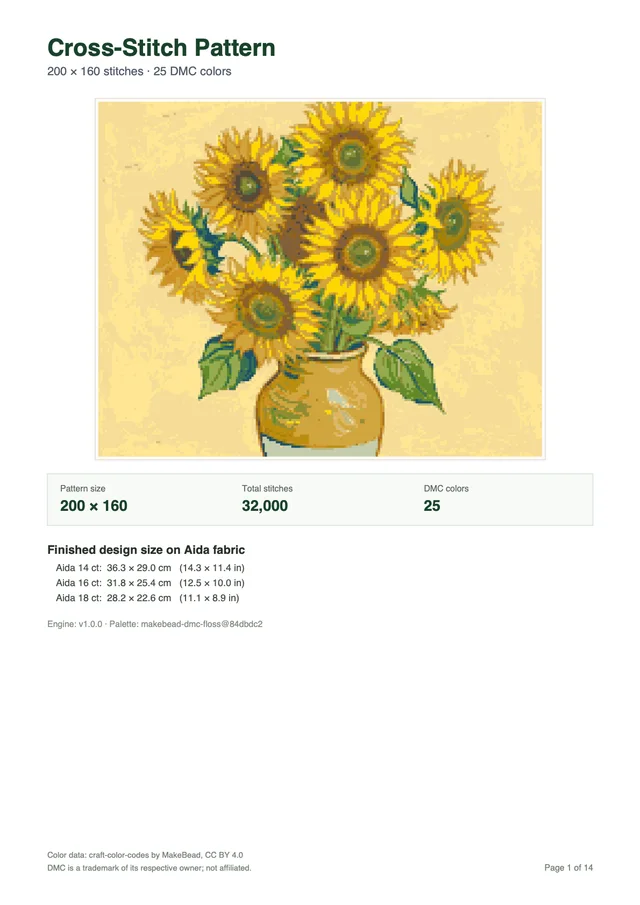
Every generated PDF chart delivers a comprehensive multi-page document formatted for standard home and professional printing. The file includes cover artwork, complete DMC floss keys, and tiled symbol pages for effortless needlework tracking.
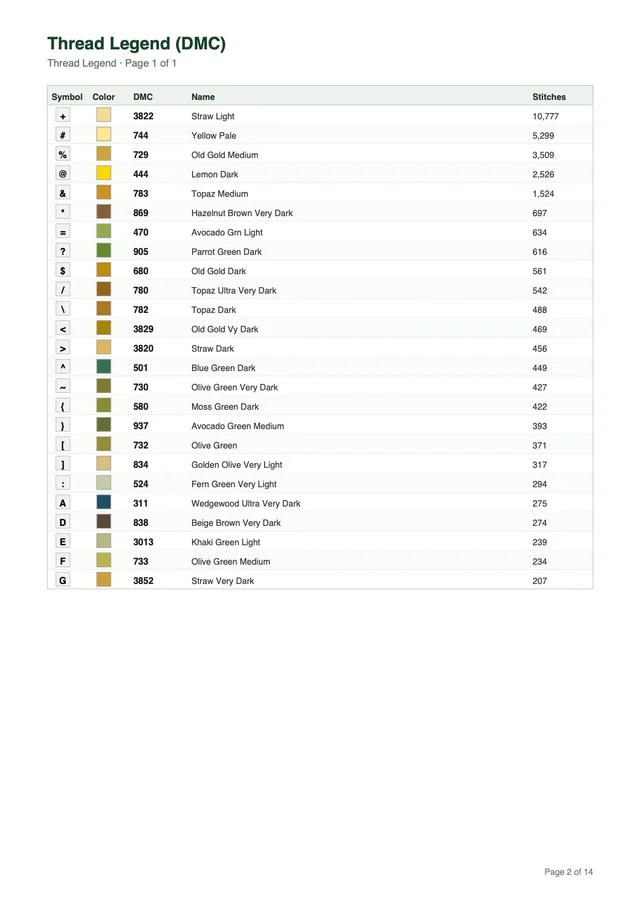
Our export engine packages your embroidery project into high-resolution Letter or A4 document formats. The front cover displays a full-color graphic preview alongside total stitch counts and physical fabric measurements. Following the cover, a comprehensive DMC floss legend lists every required color, its official shade number, and an assigned high-contrast symbol. The legend records DMC 310 for pure black alongside every other matched cotton tone.
To ensure comfortable stitching, the chart divides large compositions across multiple sequential pages. Each interior chart tile displays an active stitching grid exactly 50 stitches wide by 60 stitches tall. A bold grid accent line appears every 10 stitches across horizontal and vertical axes to help you count fabric threads. Clear numeric edge coordinates line every page perimeter, while a miniature corner minimap indicates your exact placement across the broader canvas.
Following an organized stitching strategy makes working on multi-page historical paintings enjoyable and relaxing. Consider these practical methods when preparing your workspace:
Our sunflower sample pattern measures 200 by 160 stitches with 25 colors and spans 14 organized printable pages. The crisp vector layout prevents pixelation even when printing fine symbols on basic desktop inkjet printers. You can review symbol clarity in the free browser preview before initiating the document download.
Working from a clean multi-page document helps stitchers maintain their place during long crafting sessions. The corner minimap is particularly helpful when navigating large background areas like dark blue skies or textured fields. By consulting the minimap, you always know which quadrant of the painting you are currently completing. That visual orientation eliminates confusion when moving from one printed page to the next.
High-contrast symbols are carefully selected to avoid visual confusion under household craft lamps. Similar symbols are never assigned to adjacent color shades, reducing the risk of stitching errors. Crafters can easily distinguish between dots, triangles, slashes, and open squares across every section of the grid. Clear typographic contrast keeps eye strain to a minimum over long evening stitching sessions.
Printing your pattern pages allows you to mark off completed stitches with highlighter pens as you work. Many experienced needleworkers prefer working from paper charts because physical pages require no screen charging or digital zooming. You can store your active pages in protective plastic sleeves inside a three-ring project binder. That tactile routine keeps your pattern crisp, clean, and organized from start to finish.
Creating a finished famous painting cross stitch brings classical artistic culture right into your living room through patient needlecraft. The Cross Stitch pattern maker gives you complete control over scale, detail, and thread count from your very first stitch. Upload your public-domain fine art image, refine your grid dimensions, and download your printable chart to begin stitching your personal masterpiece.
No. You must supply your own digital image file that you have the legal right to reproduce. Many historic paintings sit in the public domain, but modern museum photographs of those pieces may carry separate reproduction restrictions. Always verify the license of your source image before uploading it into the Cross Stitch pattern maker.
No. The generator creates counted charts using exclusively full cross stitches mapped to DMC cotton floss. It does not generate backstitch lines, French knot accents, or fractional stitches. Impasto paint textures translate directly into square blocks of solid counted color.
You can select presets of 10, 20, 30, 40, or 50 colors, or enter any custom count between 2 and 50. Fine art charts do not use 150 to 300 shades in our tool. Setting your palette to 40 or 50 DMC colors provides rich tonal blends for skies, floral petals, and dark shadows.
The browser tool accepts JPEG, PNG, and WebP files up to 20 MB and 8,000 pixels per side. You can crop your artwork directly in the browser and set stitch widths from 10 to 300 stitches. Total pattern density is capped at 90,000 stitches.
When you sign up using your Google account, you receive 1 free credit. Creating a brand new printable PDF chart costs 1 credit. Subsequent repeat downloads of your previously generated PDF pattern cost zero credits.
Stitching a famous painting cross stitch project lets you recreate timeless museum masterpieces on Aida cloth one counted square at a time. Upload your public-domain painting image, balance your floss palette, and preview the full grid in your browser before printing. When you sign up, you receive 1 free credit to turn your favorite classic masterpiece into an heirloom needlework chart today.
Try for freeUpload a photo and see your pattern in seconds. No account needed to preview.